

If you have ever tracked a flight online and watched it suddenly turn red with the label “7700,” you may have felt a jolt of worry. That four-digit number is called squawk 7700, and it is one of the most important codes in the entire aviation world. It is not something pilots use lightly, and it is not something that happens every day. When squawk 7700 shows up on a radar screen, everyone on the ground air traffic controllers, airport staff, and emergency crews instantly understands that a plane needs help right now.
This article breaks down exactly what squawk 7700 means, why pilots use it, and what happens after it is set. We will look at real examples of squawk 7700 in action, compare it with other emergency codes like 7500 and 7600, and answer the most common questions people search for about squawk 7700. Whether you are a curious flight tracker, a student studying aviation, or someone who just saw “squawk 7700” trending online and wants a simple explanation, this guide will walk you through it step by step.
By the end of this article, you will understand squawk 7700 well enough to explain it to a friend in one sentence: it is the universal signal that tells air traffic control “this aircraft has an emergency, please give us priority.” That is the short version. But squawk 7700 has a lot more depth to it, from its history to the technology behind it, and that is exactly what we will cover next.
What Is Squawk 7700?
Squawk 7700 is a four-digit transponder code that pilots enter into their aircraft’s transponder to signal a general emergency to air traffic control. A transponder is a small device inside every commercial and most private aircraft that sends a unique signal to radar systems on the ground. This signal shows up as a code, and controllers use that code to identify and track each plane in the sky.
Most of the time, a plane is squawking a normal code that simply helps controllers tell one aircraft apart from another. But a handful of codes are reserved for special situations. Squawk 7700 is the code reserved for emergencies of almost any kind. The moment a pilot sets squawk 7700, the aircraft’s icon usually turns red or highlighted on radar screens (and on public flight-tracking websites), and it triggers alerts across the air traffic control system.
In simple words, squawk 7700 means: “Something is wrong on this flight, and we need help.”
Why Do Pilots Use Squawk 7700?
Pilots are trained to use squawk 7700 whenever they face a serious problem that could affect the safety of the flight. It does not always mean the plane is about to crash in fact, most squawk 7700 events end with a completely safe landing. What it does mean is that the crew wants immediate attention and priority handling from air traffic control.
Here are the most common reasons a pilot might squawk 7700:
- Engine failure or engine fire: One of the leading causes of a squawk 7700 declaration
- Medical emergencies: A passenger or crew member needing urgent care
- Loss of cabin pressure: Forcing the aircraft to descend quickly
- Severe weather or turbulence damage
- Fuel shortage: Running low on fuel and needing to land as soon as possible
- Bird strikes: Especially if they damage an engine
- Smoke or fire in the cabin
- Flight control or hydraulic system problems
- Security concerns, such as a disruptive passenger
- Landing gear malfunctions
Whenever any of these situations occur, squawk 7700 gives the flight crew a fast, universal way to tell every controller nearby that they need extra attention, a clear path, and possibly emergency services waiting on the ground.
How Does Squawk 7700 Actually Work?
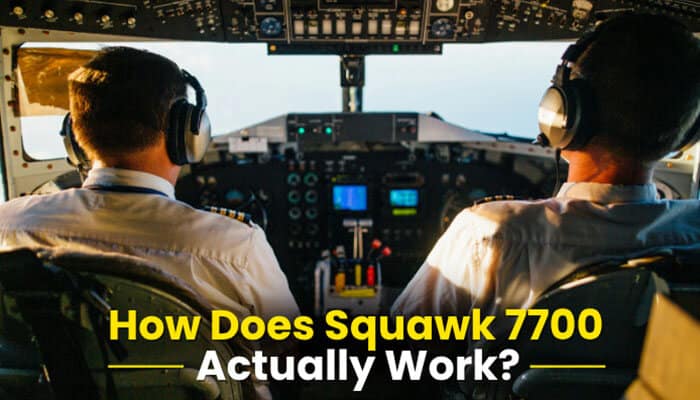
Every aircraft transponder has a keypad, similar to an old telephone dial, where pilots can enter a four-digit code. Under normal conditions, air traffic control assigns each aircraft a unique code so it can be tracked easily on radar. If an emergency happens, the pilot (or sometimes the co-pilot, depending on cockpit workload) simply types in 7700 instead of the assigned code.
Once squawk 7700 is entered, here is what happens almost instantly:
1. The aircraft appears highlighted, often in red, on every radar screen tracking that airspace.
2. An automatic alert sounds in air traffic control centers, letting controllers know a squawk 7700 emergency is happening.
3. Controllers immediately try to contact the aircraft by radio to find out the nature of the emergency.
4. The flight is given priority; other planes may be rerouted to clear airspace or a runway.
5. Emergency services, such as fire trucks and medical teams, are placed on standby near the airport where the aircraft is expected to land.
This entire process can begin within seconds of the pilot setting squawk 7700, which is exactly why the code is so effective. It removes the need for long radio explanations during a stressful moment and replaces it with one simple, universally recognized signal.
Squawk 7700 vs. Other Emergency Codes
Squawk 7700 is not the only special code pilots use. There are three main emergency transponder codes recognized around the world, and it helps to understand how they differ.
| Code | Meaning | When It Is Used |
| 7500 | Hijacking | Used when an aircraft is being unlawfully interfered with or hijacked. |
| 7600 | Radio/communication failure | Used when the flight crew loses the ability to communicate with air traffic control. |
| 7700 | General emergency | Used for serious emergencies, such as engine trouble or a medical issue. |
| 1200 / 7000 | Normal VFR flight | Standard transponder code for visual flight; it does not indicate an emergency. |
As the table shows, squawk 7700 is the broadest of the three emergency codes. While 7500 and 7600 are used for very specific situations, squawk 7700 covers almost every other type of in-flight emergency a pilot might face. This is why squawk 7700 is reported in the news far more often than the other two codes, it applies to a much wider range of incidents.
Real Examples of Squawk 7700 in Action
Squawk 7700 shows up in real aviation news more often than most people realize, and looking at real cases helps make the meaning of squawk 7700 much clearer.
- A British Airways Airbus A350 flying from Mumbai to London issued a squawk 7700 code while cruising at 36,000 feet near Dubai, and the flight was diverted to Doha, Qatar as a result.
- A Malaysia Airlines Boeing 737 was reported squawking 7700 south of Kuala Lumpur before it landed safely, with the code noted as commonly used for problems such as engine failure, medical emergencies, low fuel, bird strikes, or fires.
- A United Airlines Boeing 777 declared squawk 7700 on approach to San Francisco after developing an issue with one of its engines during a long flight.
- An EasyJet flight from Glasgow to Birmingham declared squawk 7700 shortly after takeoff and returned to Glasgow Airport, later confirmed to be due to a passenger needing urgent medical attention.
- A Lufthansa Airbus A320neo flying out of London Heathrow transmitted a squawk 7700 code within about 23 minutes of takeoff after crews reported a technical issue, reportedly linked to a fire alert in the engine, and the flight turned back.
Notice a pattern here: In every single case, squawk 7700 was followed by a safe landing. That is the point worth remembering: squawk 7700 is a safety tool, not a sign that disaster is guaranteed. It exists so that pilots can get the fastest possible support from the ground, and in the vast majority of cases, that support helps bring the flight down safely.
What Happens on the Ground After Squawk 7700 Is Declared?
Once squawk 7700 appears on a controller’s screen, a coordinated response begins almost immediately across several teams:
- Air traffic control clears airspace around the aircraft and may assign it a more direct route to the nearest suitable airport.
- Airport operations prepare a runway, sometimes closing it to other traffic so the emergency aircraft can land without delay.
- Firefighting and rescue crews move into position near the runway, ready to respond the moment the plane touches down.
- Medical teams stand by if the emergency involves a passenger or crew member’s health.
- Airline operations centers are notified so they can support the flight crew with technical or logistical information.
This is why squawk 7700 is sometimes described as a “silent alarm.” The pilots do not need to make lengthy radio calls explaining every detail right away, squawk 7700 does much of that communication instantly, giving the crew more time and mental space to focus on flying the aircraft safely.
Do Pilots Get in Trouble for Using Squawk 7700?
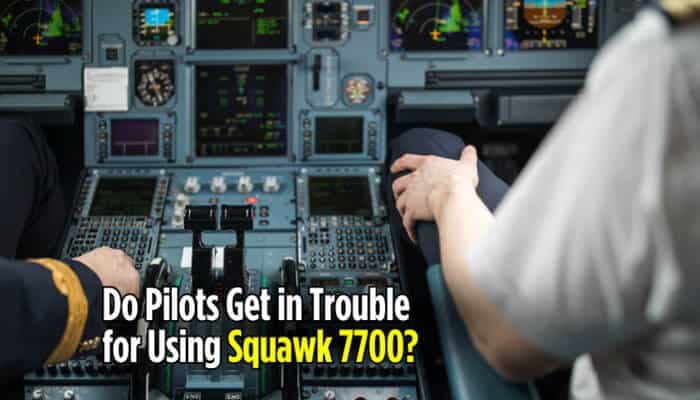
No. This is one of the biggest misconceptions people have about squawk 7700. Pilots are actively encouraged to use squawk 7700 whenever they feel there is a genuine safety concern, even if it later turns out to be a minor issue. Aviation authorities would much rather have a pilot declare squawk 7700 and turn out to be cautious than have a pilot hesitate during a real emergency.
In fact, sometimes squawk 7700 is set by accident, such as a wrong keypad entry. When this happens, controllers usually confirm with the crew over radio, and if there is no real emergency, the flight continues normally. There is no penalty for a false alarm caused by an honest mistake.
Is Squawk 7700 the Same as “Mayday”?
Squawk 7700 and “Mayday” are related but not identical. “Mayday” is a spoken emergency call made over the radio, said three times in a row, to alert controllers verbally. Squawk 7700 is the transponder code that does the same job electronically, through radar, rather than through voice.
Pilots often use both together. A pilot might declare “Mayday” over the radio while also setting squawk 7700 on the transponder, covering both the audio and visual alert systems at the same time. This overlap makes sure the emergency is recognized even if radio communication becomes difficult.
Quick Facts About Squawk 7700
- Squawk 7700 is recognized internationally, meaning it works the same way in almost every country’s airspace.
- Squawk 7700 turns the aircraft’s icon red or highlighted on most flight-tracking apps and websites.
- Squawk 7700 can be set by the pilot voluntarily or after being instructed by air traffic control.
- Squawk 7700 does not specify the type of emergency; pilots still need to explain the details over the radio once contact is made.
- Squawk 7700 gives an aircraft priority over all other traffic in the area.
Final Thoughts
Squawk 7700 might look alarming when you spot it on a flight-tracking map, but it is really a sign that the aviation safety system is doing exactly what it was designed to do. Squawk 7700 gives pilots a fast, clear, and universally understood way to ask for help, and it gives everyone on the ground controllers, airports, and emergency teams the head start they need to respond effectively.
The next time you see squawk 7700 mentioned in the news or on a tracking app, you will know it is not a mystery code. It is a well-practiced safety procedure, built into aviation for one simple reason: to help pilots bring every flight home safely.
Squawk 7700 FAQs
1. What does squawk 7700 mean in simple words?
Squawk 7700 means a plane has declared a general emergency and needs priority help from air traffic control.
2. Does squawk 7700 always mean the plane will crash?
No. Squawk 7700 is a precautionary and priority signal. Most flights that squawk 7700 land safely.
3. Can squawk 7700 be set by accident?
Yes, occasionally a pilot enters squawk 7700 by mistake while adjusting the transponder. Controllers confirm with the crew to check if it is a real emergency.
4. How is squawk 7700 different from squawk 7500 and 7600?
Squawk 7500 means hijacking, squawk 7600 means loss of radio communication, and squawk 7700 covers all other general emergencies.
5. Who decides to squawk 7700, the pilot or air traffic control?
Either can trigger it. A pilot may set squawk 7700 on their own judgment, or air traffic control may ask the pilot to squawk 7700 if they notice something unusual.
6. Will passengers know if their flight squawks 7700?
Not always immediately. Crews often focus on flying the aircraft safely first and inform passengers through a calm cabin announcement once the situation is under control.