

Finding the Best Budget Drones in 2026 is easier than it used to be. Affordable drones now offer features that once belonged to much more expensive models, including 4K recording, GPS positioning, Return to Home, subject tracking, electronic stabilization, and longer battery life. The challenge is knowing which specifications actually matter and which are mainly marketing.
For beginners, travelers, families, students, and casual content creators, the cheapest drone is not always the best value. A $100 drone that is difficult to control or produces shaky footage can be more frustrating than a slightly more expensive model with GPS and better stabilization. Weight also matters in the United States because FAA requirements differ depending on how and why a drone is flown.
This guide compares 10 of the Best Budget Drones available to U.S. shoppers in 2026. The selections cover different needs, from inexpensive training drones to sub-250-gram camera drones capable of producing impressive travel footage. We focus on useful factors such as camera quality, stabilization, flight time, portability, GPS, safety features, replacement-part availability, and overall value.
Best Budget Drones: Quick Comparison
| Drone | Approx. Price | Weight | Camera | Max Flight Time | Best For |
| DJI Neo | $169 | 135 g | 4K | About 18 min | Vlogging and tracking |
| DJI Mini 4K | $299 | Under 249 g | 4K/30fps | 31 min | Aerial photography |
| Potensic ATOM 2 | $300–$320 | Under 249 g | Up to 4K video/8K photos | 32 min | Content creators |
| Potensic ATOM | $250–$260 | Under 249 g | 4K, 3-axis gimbal | 32 min | Stable video |
| Potensic ATOM SE | About $250 | Under 249 g | 4K with EIS | 31 min | Beginners |
| Potensic ATOM LT | About $180 | Under 249 g | Camera with EIS | Up to 40 min | Flight endurance |
| Holy Stone HS360S | About $180 | 249 g | 4K | 20 min | GPS beginners |
| Holy Stone HS175D | About $170 | 215 g | Up to 4K photos | 23 min/battery | Learning GPS flight |
| Holy Stone HS720E | About $220 | 495 g | 4K with EIS | 23 min/battery | Longer sessions |
| Ryze Tello | Varies | 87 g | 720p | 13 min | Indoor learning |
Prices are approximate reference prices and can change with sales, bundles, availability, and retailer promotions.
1. DJI Neo: Best Budget Drone for Vlogging
The DJI Neo stands out among the Best Budget Drones because it approaches flying differently from a traditional camera drone.
It weighs only 135 grams and can take off from a user’s palm. DJI also includes subject tracking, QuickShots, full-coverage propeller guards, and 4K stabilized video.
That combination makes the Neo particularly useful for people who want quick videos rather than complex aerial photography.
Why it stands out
- 135-gram lightweight design
- 4K stabilized video
- Palm takeoff and landing
- Subject tracking
- Automated QuickShots
- Multiple control methods
- Full propeller guards
The Neo makes sense for hikers, solo travelers, vloggers, families, and social-media creators who want a compact flying camera.
Potential drawback: Serious landscape photographers may prefer a conventional camera drone with a dedicated controller and 3-axis mechanical gimbal.
2. DJI Mini 4K: Best Affordable Drone for Aerial Photography
The DJI Mini 4K remains one of the strongest entry points into traditional aerial photography.
It weighs under 249 grams and combines a 1/2.3-inch CMOS camera with 4K/30fps recording, Return to Home, stable hovering, QuickShots, panoramas, and a maximum advertised flight time of 31 minutes. DJI also specifies Level 5 wind resistance and up to 10 km transmission under applicable test conditions.
Those specifications provide a much more complete camera-drone experience than most toy-class models.
Best features
- 4K/30fps recording
- 3-axis camera stabilization
- Under-249-gram design
- 31-minute rated flight time
- GPS-assisted hovering
- Return to Home
- QuickShots
- Panorama modes
For beginners interested mainly in aerial landscapes, vacations, property views, and outdoor video, the Mini 4K deserves serious consideration.
3. Potensic ATOM 2: Best Budget Alternative for Creators
The Potensic ATOM 2 pushes the definition of a budget drone toward the enthusiast category.
Potensic lists the drone at under 249 grams with a 1/2-inch CMOS sensor, 3-axis gimbal, 32-minute rated flight time, AI tracking, vertical shooting, and up to 10 km video transmission. The company’s current U.S. store has listed configurations starting around $300 to $320, although pricing changes.
That makes it interesting for creators who want more camera flexibility without jumping immediately into premium drone pricing.
Good for
- Travel creators
- Short-form vertical content
- Landscapes
- Outdoor adventures
- YouTube footage
- Beginner aerial filmmaking
A mechanical 3-axis gimbal is particularly important because resolution alone does not create smooth video.
4. Potensic ATOM: Best for Smooth 4K Video on a Budget
If stabilized footage matters more than having the newest model, the standard Potensic ATOM is worth considering.
It uses a 3-axis gimbal, records 4K video, weighs under 249 grams, offers a rated 32-minute flight time, and supports up to 6 km video transmission under specified conditions. Potensic’s U.S. store has listed the single-battery kit at roughly $250.
Why buyers may prefer it
The ATOM provides a useful balance between:
- Camera performance
- Mechanical stabilization
- Portability
- Flight endurance
- GPS features
- Price
This is one of the Best Budget Drones for buyers who care more about smooth travel footage than automated novelty features.
5. Potensic ATOM SE: Good Beginner 4K Drone
The ATOM SE is another sub-250-gram option aimed at newer pilots.
Potensic specifies a 1/3-inch CMOS sensor, electronic image stabilization, 31-minute maximum flight time, and a weight below 249 grams.
Unlike the ATOM and ATOM 2, however, the ATOM SE does not use the same 3-axis mechanical gimbal system. That distinction matters.
Electronic image stabilization can reduce visible shaking, but a mechanical gimbal generally gives creators more consistently smooth aerial footage.
Choose the ATOM SE if you want:
- A lightweight beginner drone
- 4K capture
- GPS-assisted flying
- Good battery life
- A simpler alternative to more expensive camera drones
6. Potensic ATOM LT: Best for Long Flight Time at a Lower Price
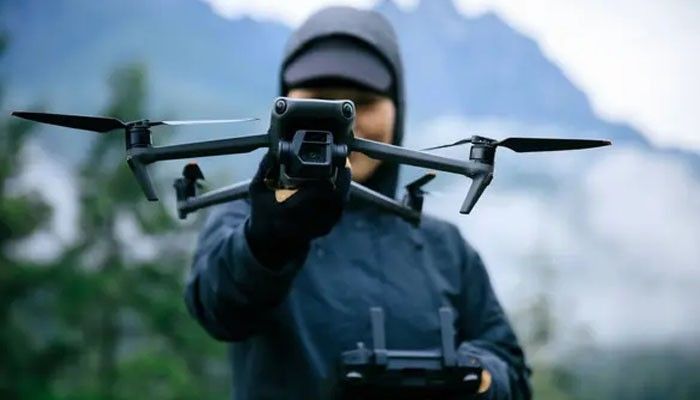
Battery life is one of the biggest weaknesses of inexpensive drones. The ATOM LT addresses that problem with an advertised flight time of up to 40 minutes.
Potensic lists it below 249 grams with a 1/3-inch CMOS sensor and single-axis stabilization with EIS. Its official U.S. store has listed it from around $180.
That makes it attractive to pilots who would rather spend more time flying than constantly swapping batteries.
The compromise is camera stabilization. Buyers mainly interested in cinematic footage may find the 3-axis ATOM more appealing.
7. Holy Stone HS360S: Best Affordable GPS Drone
The Holy Stone HS360S offers an impressive feature set around the $180 level.
It weighs 249 grams and includes GPS, smart shooting modes, Return to Home, brushless motors, a 4K camera, and a maximum advertised flight distance of about 3 km under ideal outdoor conditions. The rated flight time is 20 minutes per battery.
Useful features include
- GPS positioning
- 4K photo and video capture
- Return to Home
- Follow Me
- Time-lapse
- Automated shooting modes
- Foldable body
- Brushless motors
The HS360S is one of the Best Budget Drones for beginners who want to learn conventional GPS drone flying without spending around $300.
8. Holy Stone HS175D: Best Low-Cost GPS Training Drone
The Holy Stone HS175D is designed around beginner-friendly GPS flying.
It weighs approximately 215 grams and combines GPS, GLONASS, optical-flow positioning, brushless motors, automatic Return to Home, and several automated flight functions. Holy Stone rates flight time at 23 minutes per battery, while commonly sold kits include two batteries.
Its camera can capture 4096 × 3072 photos to a compatible memory card, while video stored to the card reaches 2688 × 1512 according to Holy Stone’s specifications.
Why beginners may like it
- GPS-assisted positioning
- Optical-flow assistance
- Auto Return
- Follow Me
- Waypoint flight
- Circle Fly
- Beginner mode
- Two-battery kits available
At roughly $170 based on Holy Stone’s listed pricing, it provides a useful bridge between inexpensive toy drones and more advanced camera drones.
9. Holy Stone HS720E: Best Budget Drone for Longer Flying Sessions
The HS720E is larger and heavier than many models on this list, but it offers features some buyers may value more than extreme portability.
Holy Stone lists a 4K camera with electronic image stabilization, brushless motors, GPS, automatic Return to Home, Follow Me functionality, and two batteries in the standard package. Each battery is rated for approximately 23 minutes.
At 495 grams, however, this drone is well above the 250-gram threshold relevant to U.S. recreational registration rules.
The HS720E therefore makes more sense for someone who prioritizes a larger platform and extended combined flying time rather than minimum weight.
10. Ryze Tello: Best Cheap Drone for Learning Indoors
The Ryze Tello is old compared with many drones on this list, but it still fills a useful niche.
At just 87 grams, it is tiny. Its vision-positioning system helps it hover indoors, while propeller guards can make early training more forgiving.
The specifications are modest by 2026 standards: 5-megapixel photos, 720p video, approximately 13 minutes of maximum flight time, and up to 100 meters of flight distance.
So why include it?
Because not every beginner needs 4K.
Someone learning basic orientation, hovering, turns, and indoor flight may get more value from a small training drone than an expensive outdoor camera model.
How We Evaluated the Best Budget Drones
Price alone should never decide which drone offers the best value. When comparing the Best Budget Drones, shoppers should consider the complete ownership experience.
Camera quality
Do not assume every drone advertised as “4K” delivers the same results.
Look at:
- Sensor size
- Frame rate
- Mechanical versus electronic stabilization
- Video bitrate
- Low-light performance
- Camera tilt control
- Memory-card recording
A stable 4K/30fps camera on a 3-axis gimbal can be more useful than a higher-resolution specification attached to an unstable camera.
Flight time
Manufacturer flight-time claims normally reflect favorable test conditions.
Real-world endurance can decrease because of:
- Wind
- Cold temperatures
- Fast flying
- Frequent climbing
- Automated tracking
- Battery age
A second battery can therefore be more valuable than a minor camera upgrade.
GPS and Return to Home
GPS is one of the most useful upgrades when moving beyond basic toy drones. It can help with stable outdoor hovering and enables functions such as Return to Home.
For first-time outdoor pilots, these features may be worth paying extra for.
Weight
Weight affects both portability and U.S. regulatory requirements. Many popular entry-level models intentionally stay around or below 249 grams.
Replacement parts
Propellers are consumable components. Batteries also lose capacity over time. Before purchasing an unfamiliar bargain drone, check whether you can easily obtain:
- Propellers
- Batteries
- Charging equipment
- Controllers
- Gimbal protectors
- Carrying cases
A cheap drone becomes poor value if one damaged propeller or battery makes it unusable.
Best Budget Drones by Use Case
Instead of asking which drone is universally “best,” match its strengths to what you plan to do.
- For vlogging: DJI Neo
- For traditional aerial photography: DJI Mini 4K
- For creator features: Potensic ATOM 2
- For mechanically stabilized 4K on a budget: Potensic ATOM
- For maximum advertised endurance at a lower price: Potensic ATOM LT
- For affordable GPS flying: Holy Stone HS360S
- For GPS training: Holy Stone HS175D
- For indoor learning: Ryze Tello
How Much Should You Spend on a Budget Drone?
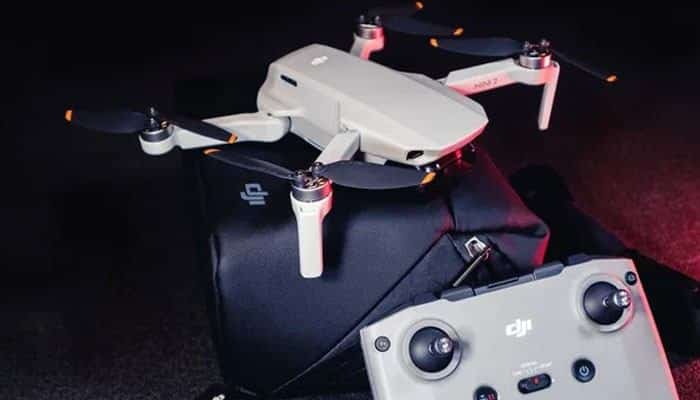
For most buyers, affordable drones fall into three useful groups.
1. Under $150: Expect basic training drones, indoor models, and sale-priced entry-level products. Camera quality and wind resistance are usually limited.
2. $150 to $250: This is one of the most interesting price ranges for Best Budget Drones.
You can find features such as:
- GPS
- Brushless motors
- 4K recording
- Return to Home
- Longer battery life
- Automated flight modes
3. $250 to $350
This range begins to offer more serious camera-drone performance, including 3-axis gimbals, better transmission systems, improved cameras, and more sophisticated tracking features.
If video quality is important, spending slightly more in this category may provide better long-term value.
What U.S. Buyers Need to Know About FAA Drone Rules
Buying a lightweight drone does not mean there are no rules. According to the FAA, drones weighing 250 grams or more generally need registration when flown recreationally. Drones weighing less than 250 grams can qualify for the recreational registration exception, provided they are flown under the Exception for Limited Recreational Operations.
However, drones operated under Part 107 must be registered regardless of weight. Registered drones must also comply with applicable Remote ID requirements.
Recreational flyers must take the free Recreational UAS Safety Test, or TRUST, and carry proof of passing while flying. Pilots must also follow applicable airspace and operating rules.
The FAA’s B4UFLY services can help pilots check airspace restrictions, controlled airspace, airports, Temporary Flight Restrictions, national parks, and other location-related information before flying.
Always verify current FAA requirements before a flight because rules and airspace restrictions can change.
Common Mistakes When Buying a Cheap Drone
A low price can be attractive, but avoid buying based on one headline specification.
Common mistakes include:
- Choosing a drone only because the box says “4K”
- Ignoring stabilization
- Expecting advertised maximum flight time in every condition
- Flying too far on the first trip
- Ignoring wind limits
- Buying a model with difficult-to-find batteries
- Forgetting memory-card costs
- Assuming a sub-250g drone is exempt from every FAA rule
- Ignoring local takeoff and landing restrictions
- Buying advanced equipment before learning basic controls
A better strategy is to buy the least expensive drone that reliably covers your actual needs.
Conclusion
The Best Budget Drones in 2026 prove that beginners no longer need a premium budget to enjoy useful GPS functions, stabilized video, smart shooting modes, and respectable battery life.
The key is to buy according to your real use case. The DJI Neo is particularly suited to quick automated videos and tracking, while the DJI Mini 4K provides a more traditional aerial-photography experience. Potensic’s ATOM family offers several attractive alternatives for buyers who value camera stabilization and flight endurance, while Holy Stone provides lower-cost GPS models for people learning the basics.
Before buying, compare more than price. Look closely at weight, camera stabilization, battery life, GPS performance, replacement-part availability, controller design, and the total cost of extra batteries and accessories.
Most importantly, learn the rules before your first flight. A well-chosen affordable drone combined with safe, responsible flying will usually provide more value than buying an expensive model filled with features you rarely use.
Best Budget Drones FAQs
1. What are the Best Budget Drones in 2026?
Strong options include the DJI Neo, DJI Mini 4K, Potensic ATOM series, Holy Stone HS360S, and Holy Stone HS175D. The right model depends on whether your priority is photography, tracking, flight time, learning, or price.
2. What is the best budget drone for beginners?
Beginners should prioritize stable hovering, GPS, Return to Home, straightforward controls, and available replacement parts. Models such as the DJI Mini 4K, Holy Stone HS360S, and Potensic ATOM family provide several beginner-friendly features.
3. Can a cheap drone record good 4K video?
Yes, but resolution is only part of image quality. Sensor quality, stabilization, frame rate, compression, lighting, and camera movement also affect the finished footage.
4. Are drones under 250 grams better for beginners?
They can be convenient because they are portable and may qualify for the FAA recreational registration exception. However, pilots still have to follow applicable recreational flying and airspace rules. Part 107 operations require registration regardless of weight.
5. Is GPS necessary on a budget drone?
GPS is not essential for basic indoor training, but it is highly useful outdoors. It can improve positioning and enable features such as Return to Home.
6. Is a 3-axis gimbal worth paying more for?
For people interested in aerial video, usually yes. A 3-axis mechanical gimbal physically compensates for aircraft movement and generally produces smoother footage than a fixed camera relying only on electronic stabilization.
7. How long do budget drones fly?
Depending on the model, advertised maximum flight times in this group range from roughly 13 minutes to around 40 minutes per battery. Actual flight time varies with wind, temperature, battery condition, payload, and flying style.
8. Do I need to register a budget drone with the FAA?
It depends on the drone’s weight and how it is used. For qualifying recreational operations, drones below 250 grams are generally exempt from registration. Part 107 drones must be registered regardless of weight. Check current FAA rules before flying.