

A thermal drone can reveal problems that ordinary aerial cameras cannot detect, from overheating electrical equipment and defective solar panels to unusual temperature patterns in buildings. By combining infrared imaging with unmanned aerial vehicle (UAV) technology, these drones help businesses, farmers and emergency responders collect valuable information from difficult-to-reach locations.
Whether used for preventive maintenance, precision agriculture or emergency operations, thermal imaging offers significant practical advantages. However, choosing the right drone requires careful consideration of camera resolution, temperature accuracy, flight performance and overall ownership costs.
What Is a Thermal Drone?
A thermal drone is an unmanned aerial vehicle equipped with an infrared camera that detects thermal radiation and converts it into images representing surface temperature differences.
Unlike conventional drones that rely on visible light, thermal imaging drones can detect heat patterns during the day and in complete darkness.
Professional models typically feature:
- Infrared and optical cameras
- GPS navigation systems
- Stabilized camera gimbals
- Temperature measurement software
- Real-time video transmission
- Intelligent flight controls
These technologies help operators investigate temperature anomalies and collect inspection data without relying entirely on manual assessments.
How Does a Thermal Drone Work?
Every object with a temperature above absolute zero emits infrared radiation. A thermal camera detects this radiation and processes it into an image known as a thermogram.
The process involves five stages:
- Infrared detection: The camera receives emitted and reflected infrared radiation.
- Sensor conversion: The thermal sensor converts radiation into electrical signals.
- Image processing: An onboard processor produces a thermal image.
- Temperature representation: Colors or grayscale shades indicate thermal differences.
- Data analysis: Operators examine temperature patterns to identify abnormalities.
Warmer surfaces may appear yellow, orange or white, while cooler areas may appear blue or purple. These colors depend on the selected imaging palette and temperature scale.
Types of Thermal Cameras Used in Drones
Most professional thermal drone models use uncooled microbolometer sensors because they are lightweight, compact and energy-efficient. Thermal cameras differ in sensor technology and temperature measurement capabilities.
| Camera Technology | Main Characteristics |
|---|---|
| Uncooled microbolometer | Lightweight and energy-efficient |
| Cooled infrared sensor | High sensitivity for specialized applications |
| Radiometric camera | Measures estimated surface temperatures |
| Non-radiometric camera | Displays relative heat patterns |
Sensor cooling technology and radiometric capability are separate characteristics. For professional solar, electrical and building inspections, a radiometric thermal camera is generally preferable because it supports quantitative temperature analysis.
Types of Thermal Drones
Thermal drones come in different configurations designed to meet specific inspection, monitoring and operational needs.
- Compact Thermal Drones: Lightweight and portable models ideal for routine property inspections and smaller projects.
- Enterprise Thermal Drones: Advanced platforms designed for industrial inspections, utility monitoring and emergency response.
- Modular Thermal Drones: Customizable aircraft with interchangeable thermal cameras, sensors and lenses for specialized applications.
Major Uses of Thermal Drones Across Industries
Thermal drones help professionals detect temperature anomalies, improve operational safety and collect valuable data across various industries.
- Search and Rescue: Helps locate missing individuals in darkness and difficult terrain.
- Solar Panel Inspections: Identifies abnormal hot spots and potential electrical defects.
- Agriculture and Crop Monitoring: Detects potential crop stress, irrigation problems and uneven water availability.
- Firefighting: Monitors fire-affected areas and identifies remaining hot spots.
- Building and Roof Inspections: Reveals temperature anomalies associated with moisture, insulation deficiencies and energy loss.
- Electrical and Industrial Inspections: Identifies overheating equipment and supports preventive maintenance.
- Wildlife Conservation: Assists researchers with animal monitoring and population surveys.
Thermal imaging findings should be verified through appropriate testing before making critical maintenance or operational decisions.
Thermal Drone vs Regular Drone
| Feature | Thermal Drone | Regular Drone |
|---|---|---|
| Camera technology | Infrared imaging | Visible-light imaging |
| Primary purpose | Heat detection | Photography |
| Complete darkness | Supported | Generally limited |
| Temperature measurement | Radiometric models | Generally unavailable |
| Equipment cost | Higher | Lower |
| Applications | Specialized inspections | General imaging |
Thermal imaging also differs from night vision. While night vision amplifies available light or uses near-infrared illumination, thermal cameras detect radiation associated with surface temperatures.
Benefits of Using a Thermal Drone
Aerial thermal imaging offers several operational advantages:
- Improved safety: Reduces the need to manually access certain hazardous locations.
- Faster inspections: Helps assess large properties and infrastructure efficiently.
- Early fault detection: Highlights potential equipment problems before they worsen.
- Reduced maintenance costs: Supports targeted maintenance and repairs.
- Nighttime capabilities: Collects thermal information without visible light.
- Better documentation: Provides visual evidence for inspection reports.
These benefits depend on equipment suitability, operator expertise and reliable data interpretation.
What Can and Cannot a Thermal Drone See?
A thermal drone detects surface temperature differences in daylight and darkness. However, physical barriers and environmental conditions can limit its capabilities.
| Object or Condition | Detection Capability |
|---|---|
| Exposed people and animals | Yes, with sufficient contrast |
| Overheating equipment | Generally yes |
| Complete darkness | Yes |
| Solid walls | No |
| Ordinary glass | Generally no |
| Dense vegetation | Limited |
| Underwater objects | Generally no |
| Heavy rain and fog | Reduced effectiveness |
Thermal cameras can identify surface temperature anomalies associated with hidden moisture or insulation problems but cannot directly see through solid structures.
How Far Can a Thermal Drone Detect Heat?
A thermal drone has no fixed detection range. Performance depends on sensor resolution, lens focal length, target size, weather conditions and temperature contrast.
The following example uses a thermal camera with a 13 mm lens and 17-micrometer pixel pitch.
| Target Distance | Approximate Width per Pixel |
|---|---|
| 10 meters | 1.3 cm |
| 20 meters | 2.6 cm |
| 40 meters | 5.2 cm |
| 80 meters | 10.5 cm |
Greater distances reduce image detail. Accurate temperature measurements generally require the target to occupy multiple pixels. These figures illustrate spatial resolution, not maximum detection range.
Factors Affecting Thermal Imaging Accuracy
- Surface emissivity and thermal reflections
- Camera calibration and measurement distance
- Direct sunlight and environmental heating
- Wind, humidity and rainfall
- Target size and viewing angle
Reflective surfaces, such as shiny metals, can produce misleading temperature readings.
What Is the Best Time to Use a Thermal Drone?
The best time to operate a thermal drone depends on the inspection purpose and environmental conditions.
| Application | Ideal Conditions |
|---|---|
| Solar inspections | Adequate sunlight and stable weather |
| Roof inspections | Suitable surface cooling conditions |
| Building energy audits | Sufficient indoor-outdoor temperature difference |
| Electrical inspections | Equipment under suitable operating load |
| Agriculture | Consistent environmental conditions |
Selecting appropriate inspection conditions improves thermal image reliability and reduces misleading results.
How to Conduct a Thermal Drone Inspection
A structured inspection process improves data quality and reporting consistency.
- Define the objective: Identify the equipment and information required.
- Evaluate conditions: Check weather, sunlight and environmental factors.
- Prepare equipment: Inspect batteries, sensors and flight permissions.
- Capture images: Collect infrared and conventional photographs.
- Analyze findings: Compare temperature patterns using compatible software.
- Prepare a report: Document findings, measurement conditions and recommended actions.
For example, if one solar panel appears warmer than neighboring panels under comparable operating conditions, flag it for further electrical testing rather than automatically classifying it as defective.
How Much Does a Thermal Drone Cost?
A thermal drone can cost anywhere from $1,500 to over $25,000, depending on camera resolution, flight capabilities, software and equipment configuration.
| Drone Category | Estimated Price |
|---|---|
| Used and older models | $1,500–$4,000 |
| Compact professional models | $4,000–$9,000 |
| Advanced enterprise models | $8,000–$15,000 |
| Specialized modular systems | $15,000–$25,000+ |
These are indicative prices in USD. Actual costs vary by manufacturer, supplier, availability and included accessories.
Hidden Ownership Costs
Beyond the initial purchase price, buyers should consider:
- Spare batteries and charging equipment
- Drone insurance and pilot certification
- Thermography training
- Thermal analysis software subscriptions
- Maintenance and camera calibration
- Replacement parts and repairs
Evaluating the total cost of ownership helps businesses set realistic budgets and avoid unexpected expenses.
Best Thermal Drone Models to Consider
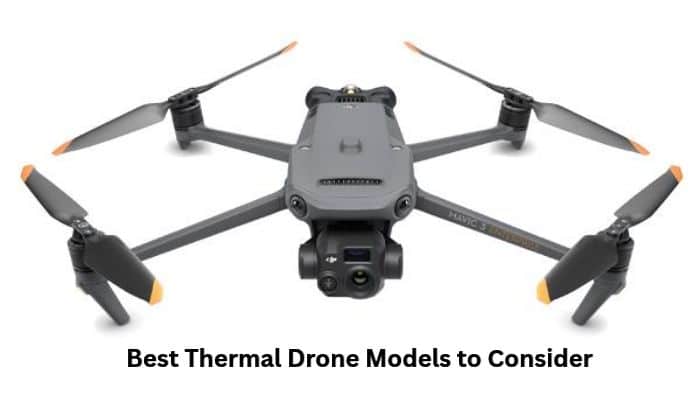
Choosing the best thermal drone depends on inspection requirements, camera capabilities, flight performance and budget. Here are four professional models worth comparing.
| Model | Thermal Resolution | Best Suited For |
|---|---|---|
| DJI Mavic 3 Thermal | 640 × 512 | Routine inspections |
| DJI Matrice 4T | 640 × 512 | Industrial inspections |
| Autel EVO Max 4T XE | 640 × 512 | Multi-sensor assessments |
| Skydio X10 | 640 × 512 | Automated inspections |
The DJI Mavic 3T offers up to 45 minutes of rated flight time, while the Matrice 4T offers up to 49 minutes under specified test conditions.
Before purchasing, compare battery availability, software compatibility, warranty coverage and long-term manufacturer support.
These comparisons are based on published manufacturer specifications rather than firsthand product testing.
Thermal Drone Buying Guide: How to Choose the Right Model
Choosing the right thermal drone requires evaluating camera quality, flight performance, software compatibility and long-term ownership costs.
- Thermal Resolution: Consider a native 640 × 512 sensor for professional inspections.
- Radiometric Imaging: Choose a camera that supports quantitative temperature measurements.
- Thermal Sensitivity: Look for lower NETD values to detect subtle temperature differences.
- Lens and Measurement Accuracy: Check the field of view, temperature accuracy and measurement range.
- Battery Performance: Evaluate practical flight duration, charging time and replacement costs.
- Measurement Modes: Look for spot measurements, area analysis and temperature alerts.
- Image Formats and Software: Ensure compatibility with radiometric files, thermal mapping and inspection reporting.
- Weather Resistance: Check the IP rating and operating temperature limits.
- Manufacturer Support: Verify warranty coverage, spare parts availability and technical assistance.
- Total Ownership Costs: Consider training, insurance, maintenance and software expenses before purchasing.
Can You Make Money With a Thermal Drone?
A thermal drone offers business opportunities in solar panel inspections, roof assessments, agricultural monitoring, building energy audits and industrial maintenance. Success depends on technical expertise, insurance, accurate reporting and consistent customer demand.
Thermal Drone Business Break-Even Example
| Expense or Revenue | Amount |
|---|---|
| Drone and accessories | $6,000 |
| Training and setup | $2,000 |
| Total initial investment | $8,000 |
| Revenue per project | $600 |
| Variable cost per project | $150 |
| Contribution per project | $450 |
| Break-even projects | 18 |
In this hypothetical example, completing 18 paid projects could recover the initial investment, excluding ongoing fixed expenses and taxes.
Actual profitability depends on market demand, service pricing, project frequency and operating costs.
Legal and Safety Requirements for Flying Thermal Drones
Drone regulations vary by country and intended use. In the United States, many commercial small-drone operations fall under FAA Part 107 rules.
Operators should:
- Obtain required pilot certification and aircraft registration.
- Comply with applicable Remote ID requirements.
- Follow airspace and altitude restrictions.
- Maintain visual line of sight unless otherwise authorized.
- Meet applicable nighttime flight requirements.
- Respect privacy and property rights.
Professional operators should also consider industry-specific requirements. IEC TS 62446-3:2017 provides technical guidance for outdoor infrared inspections of operating photovoltaic systems.
Sensitive inspection data should be protected through secure storage, controlled access and appropriate retention policies.
Thermal Drone Maintenance and Common Mistakes
Regular maintenance helps protect imaging equipment and support reliable operations.
Inspect propellers, monitor battery health, clean camera lenses according to manufacturer instructions and follow recommended servicing and calibration procedures.
Avoid these common mistakes:
- Treating every hot spot as a confirmed defect
- Ignoring surface emissivity and thermal reflections
- Collecting images without sufficient target detail
- Conducting inspections in unsuitable weather
- Underestimating training and ownership expenses
Thermal imaging should complement professional assessments rather than replace necessary physical inspections or electrical testing.
Should You Buy or Rent a Thermal Drone?
Buying a thermal drone is ideal for businesses with frequent inspection needs, while renting can be more cost-effective for occasional or short-term projects.
| Buying | Renting |
|---|---|
| Frequent inspections | Occasional projects |
| Higher upfront costs | Lower upfront costs |
| Greater equipment control | Flexible model selection |
| Long-term investment | Short-term requirements |
| Ongoing maintenance | Fewer maintenance responsibilities |
Businesses without trained operators can outsource inspections to professional thermal imaging service providers, reducing equipment and training expenses.
Future of Thermal Drone Technology
Artificial intelligence, higher-resolution infrared sensors and automated flight systems are expanding the capabilities of aerial thermal imaging.
AI-assisted software can help identify unusual temperature patterns, while predictive maintenance platforms combine historical measurements with current inspection data.
Automated docking systems may also support scheduled inspections and battery charging where legally permitted, improving operational consistency across industrial facilities.
Conclusion
A thermal drone provides valuable insights beyond conventional aerial photography. Its ability to reveal temperature differences supports safer inspections, preventive maintenance, agricultural monitoring and emergency response operations.
Choosing the right equipment requires evaluating thermal resolution, measurement accuracy, software compatibility, flight performance and total ownership costs.
With suitable technology, professional training and responsible operating practices, businesses can improve inspection efficiency, reduce unnecessary maintenance expenses and explore new commercial opportunities.
Thermal Drone FAQs
1. Can a thermal drone detect gas leaks?
Specialized thermal drones equipped with optical gas imaging (OGI) cameras can detect certain gas emissions. Standard thermal cameras generally cannot detect gas leaks directly.
2. Can a thermal drone be used indoors?
Yes, specialized indoor thermal drones can inspect warehouses, industrial facilities and confined spaces using navigation systems designed for GPS-denied environments.
3. Can a thermal drone detect mold in buildings?
A thermal drone cannot directly detect mold but can identify temperature anomalies associated with moisture conditions that encourage mold growth.
Disclaimer
This article is for informational purposes only. Thermal drone specifications, prices and regulations may vary. Verify manufacturer details and local aviation requirements before purchasing or operating a drone.
